SPRING SALE GET 10% OFF WITH VOUCHER CODE: SPRING10

BLOOD SUGAR CONTROL

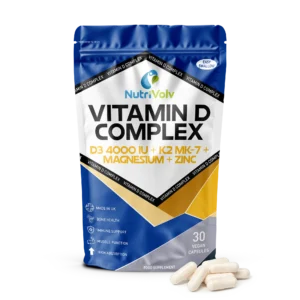
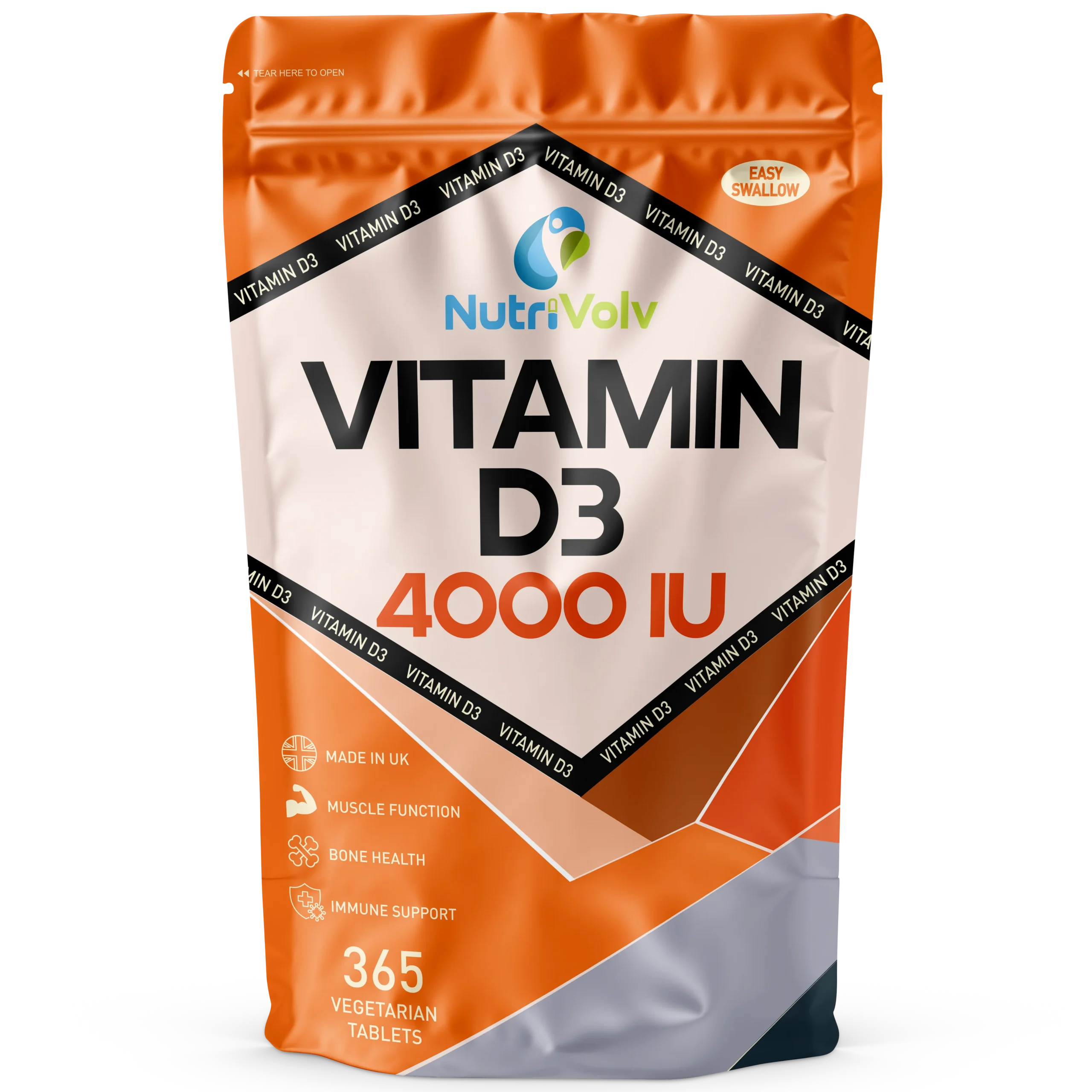
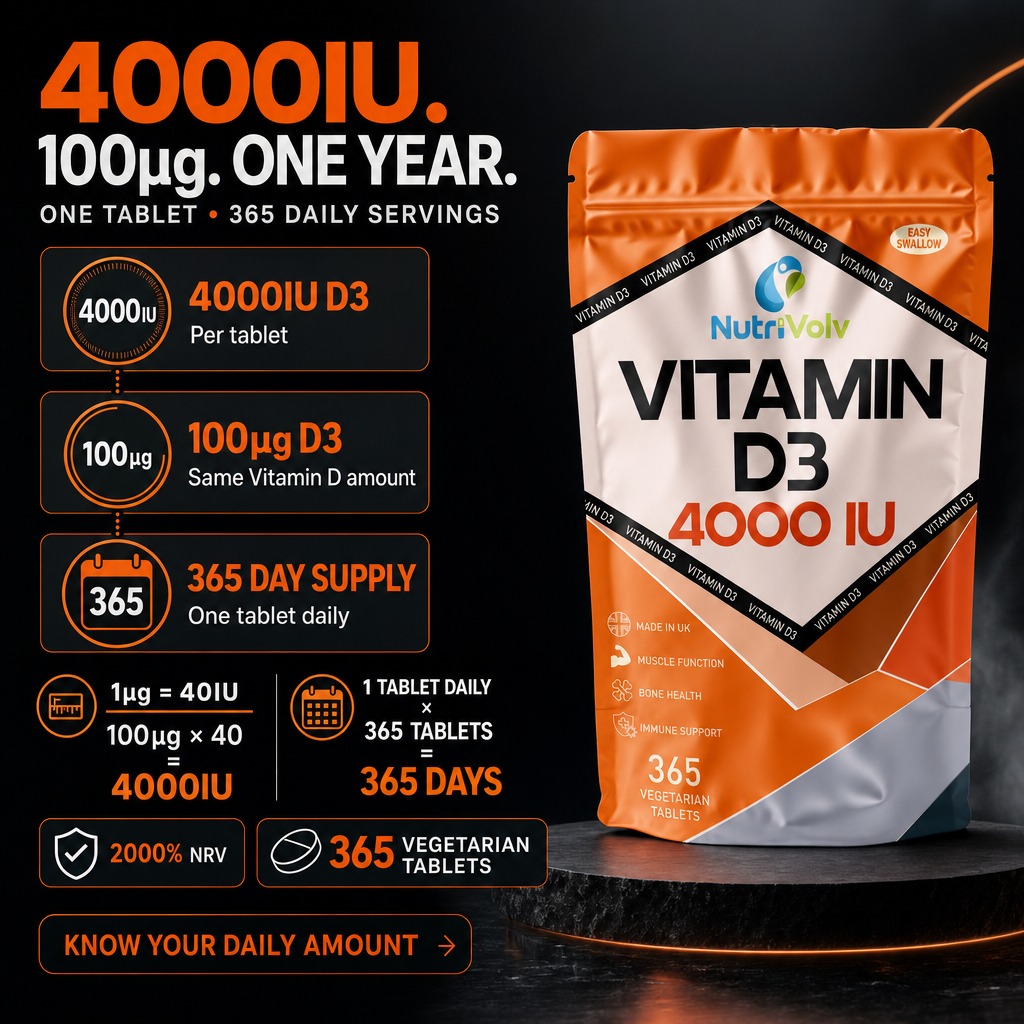
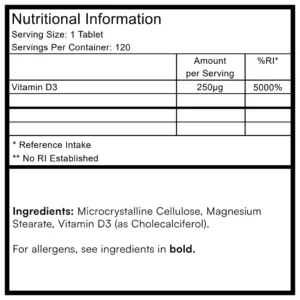
Vitamin D3 4000IU | 365 Tablets

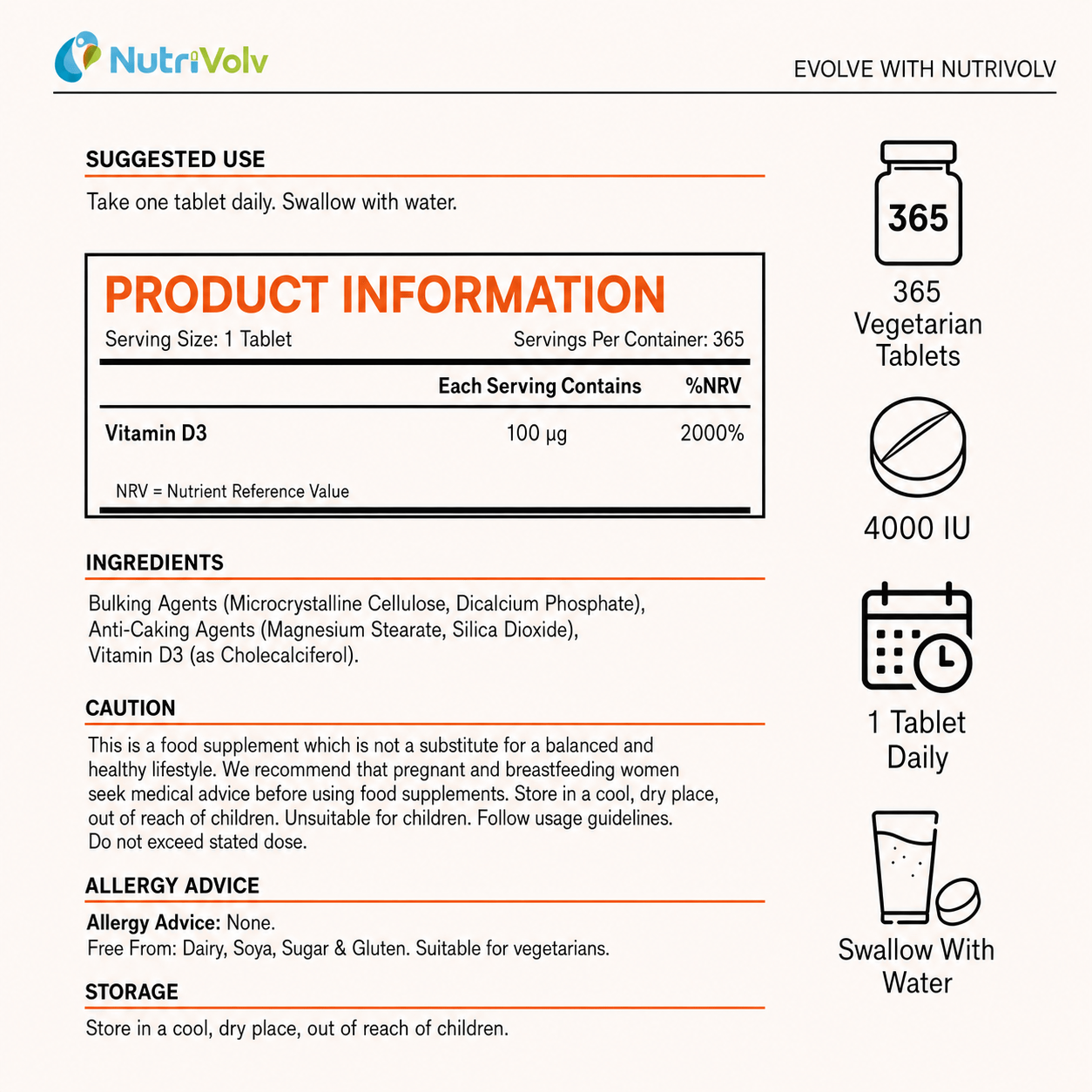
High-strength vitamin D3 tablets supporting immunity, bone health, and energy with a full year supply for consistent daily support.
  • High-strength 4000IU vitamin D3 dose
  • Supports normal immune system function
  • Contributes to maintenance of bones and teeth
  • Supports muscle function and energy levels
  • Helps reduce tiredness and fatigue
  • Ideal for low sunlight exposure
  • 365 tablets for year-round supply
Buy 1 Bag
£8.95
£8.95
5% OFF
Buy 2 Bag
£8.95
£8.50
10% OFF
3 Bag
£8.95
£8.06
Select a quantity

Gluten-Free

GMP

Non-GMO

Made in UK

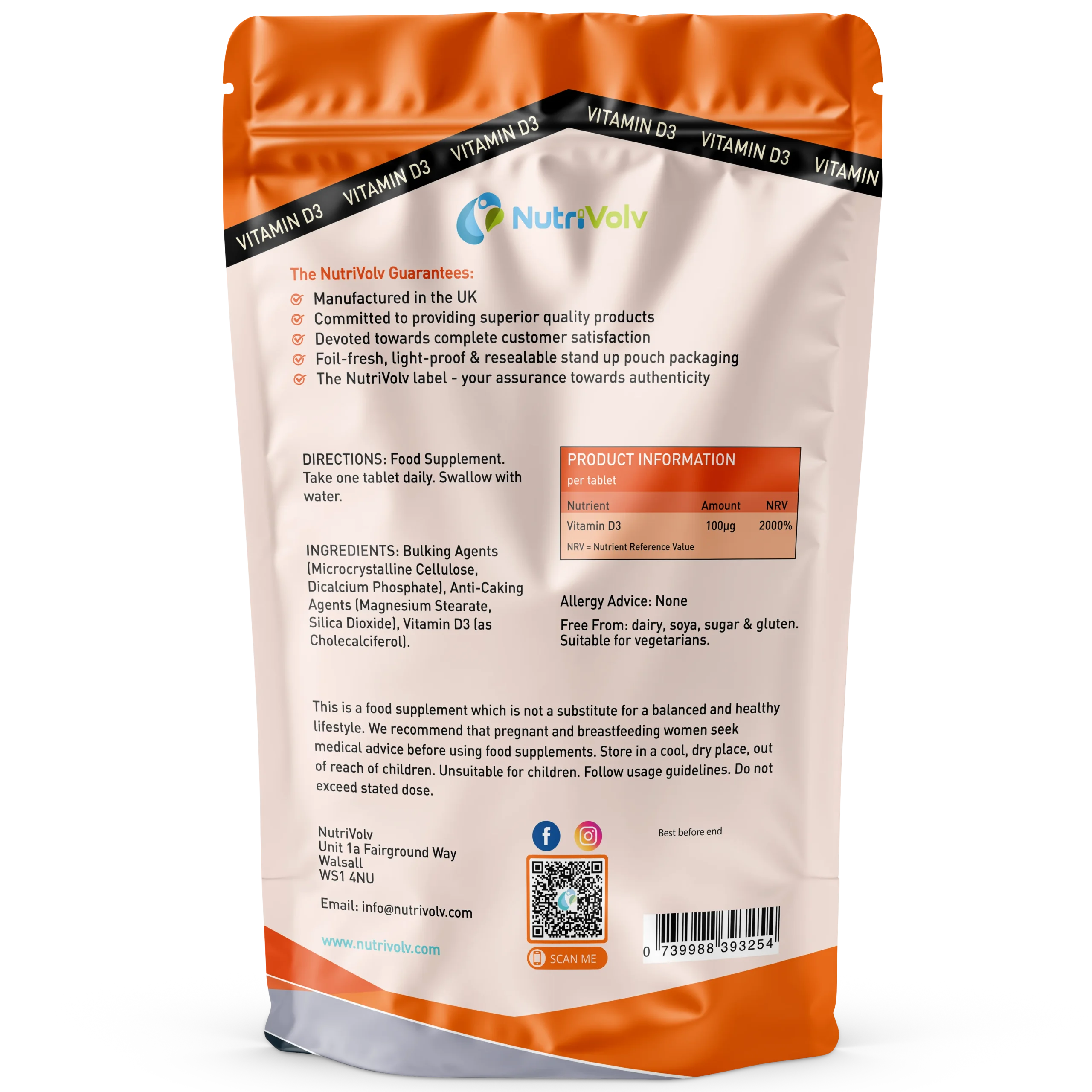
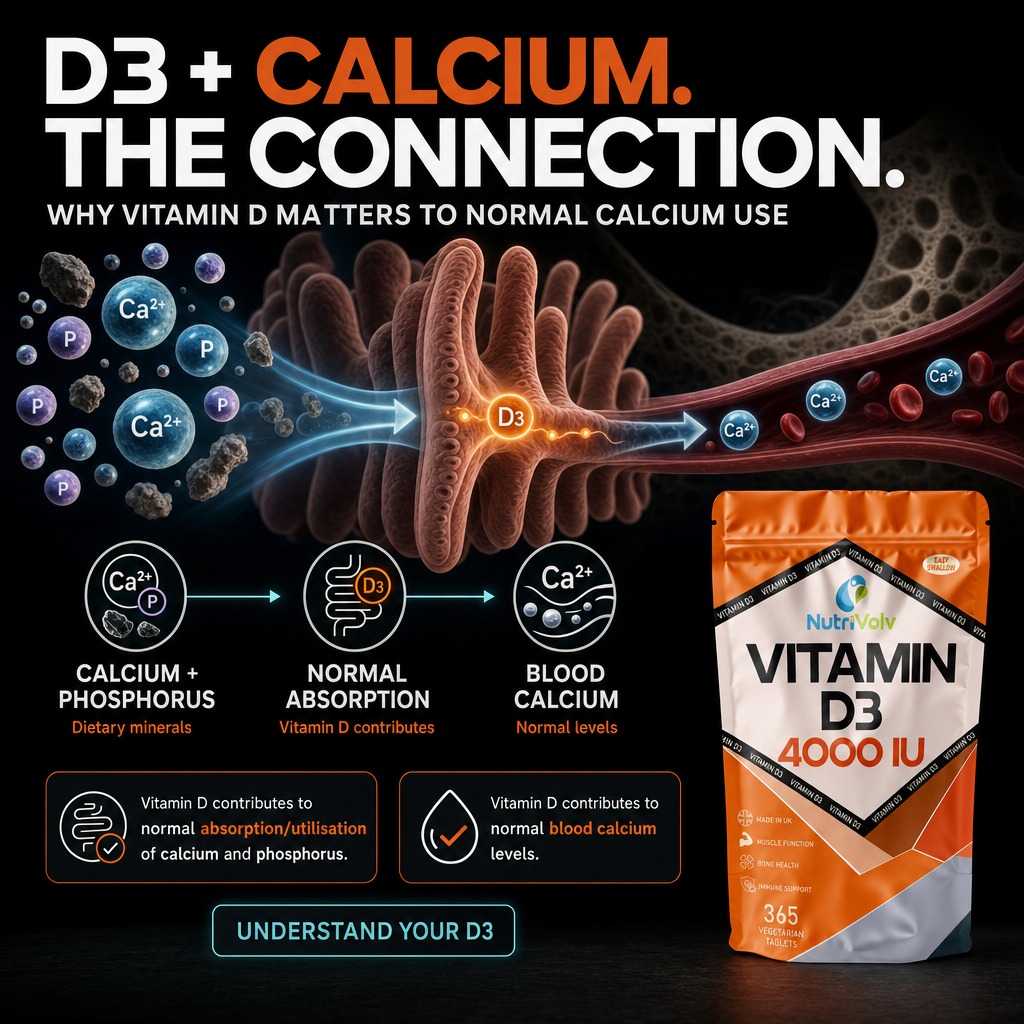
Nutrivolv Vitamin D3 4000IU tablets provide a high-strength dose of this essential nutrient, designed to support immune function, bone health, and overall wellbeing. Vitamin D plays a crucial role in calcium absorption, helping maintain strong bones and teeth while supporting normal muscle function. This higher-strength formulation is ideal for individuals with low vitamin D levels or those with limited sun exposure, particularly during winter months. With 365 tablets per pack, it offers excellent value for consistent daily supplementation. It also contributes to reducing tiredness and maintaining energy levels. Manufactured in the UK to high-quality standards, this vegan-friendly supplement supports sustained immunity, vitality, and long-term health as part of a balanced lifestyle.

Frequently Asked Question

No, 4000IU is safe for daily use and sits well below the 10,000IU upper limit. The NHS recommends 400IU minimum, but experts agree most people need 1000 to 4000IU to actually reach optimal blood levels, especially in the UK where sunlight is limited October through March. If you’re deficient (which most UK adults are in winter), 4000IU corrects levels faster without any toxicity risk. Toxicity only happens with sustained doses above 10,000IU daily for months, usually closer to 40,000IU before serious problems occur. The 4000IU dose is therapeutic, not excessive. It’s the sweet spot between low doses that barely move the needle and genuinely high doses that might cause issues. People with darker skin, obesity, or absorption problems often need this higher amount to maintain adequate levels. You can take 4000IU year-round safely. If you have kidney disease, hyperparathyroidism, or take certain medications, check with your GP first. For healthy adults, this dose delivers real benefits without the risks that come with genuinely excessive supplementation.
Yes, it genuinely works. Vitamin D3 activates your T cells and macrophages, the frontline fighters against viruses and bacteria. Studies show people with solid vitamin D levels get 40% fewer respiratory infections and recover faster when they do get ill. It regulates both immediate immune response and long-term antibody production. This matters most during UK winters when your body produces virtually zero vitamin D naturally and cold and flu season hits hardest. Your immune cells literally have vitamin D receptors on them, they need it to function properly. Low levels mean sluggish immune responses and longer recovery times. The 4000IU dose brings you into the range where immune benefits actually kick in, unlike lower doses that keep you just above deficient. Most people notice they’re getting ill less often after about a month of consistent use. It also keeps your immune system balanced, so it responds appropriately without overreacting and causing excessive inflammation. Consistent supplementation works better than sporadic use because your immune system needs steady vitamin D levels, not peaks and crashes.
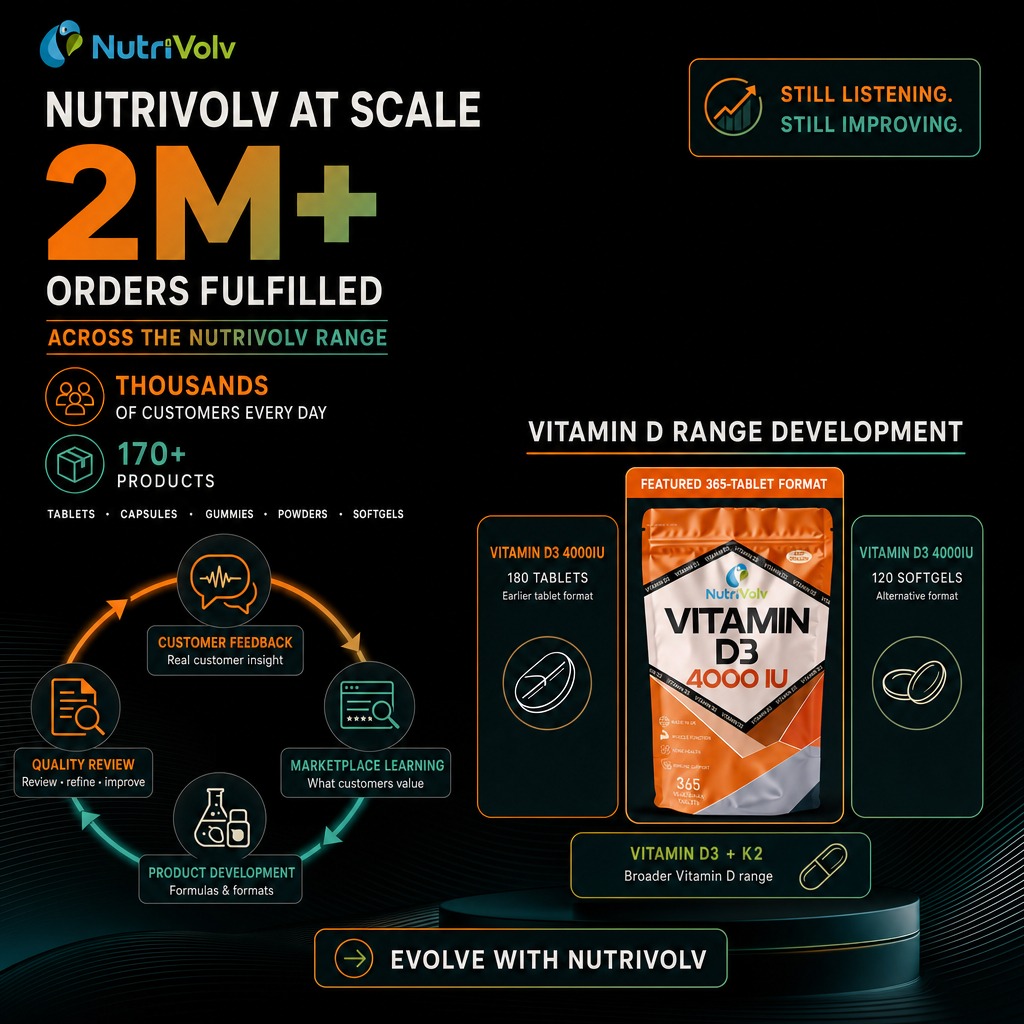
Taking vitamin D3 alone works fine, but adding K2 optimises how your body uses calcium. Vitamin D3 increases calcium absorption, while K2 directs that calcium into your bones and teeth rather than letting it deposit in arteries and soft tissues. If you’re taking high-dose D3 (like 4000IU) long-term, K2 makes sense as a safeguard against calcium ending up in the wrong places. That said, if you eat fermented foods, hard cheeses, or animal products regularly, you’re likely getting some K2 from your diet already. The combination isn’t essential, but it’s complementary. Many people take D3 alone for years with no issues, especially at moderate doses. If you’re concerned about cardiovascular health or taking very high vitamin D doses, adding K2 (around 100 to 200mcg daily) provides extra insurance. Nutrivolv’s D3 works effectively on its own for immune support, bone health, and energy. You can always add K2 separately if you want the combined benefit, but don’t let the lack of K2 stop you from taking vitamin D3, the D3 itself is what most people are desperately short of.
Take it with breakfast or your biggest meal, whichever has some fat in it. Vitamin D3 needs dietary fat to absorb properly, eggs, avocado, nuts, butter, cheese, anything with fat works. Morning fits most people’s routines better and you won’t forget it. Some people find taking it late evening messes with their sleep, though this varies person to person. The absorption difference between morning and night is tiny as long as you’re taking it with food that contains fat. Consistency beats timing. If you naturally eat a bigger dinner with more fat, take it then instead. Just don’t take it on an empty stomach or with a fat-free meal, absorption drops massively. Your body produces vitamin D from sunlight during the day, so morning supplementation aligns with your natural circadian rhythm. Pick a meal time you can stick with daily and make it automatic. Nutrivolv’s tablets are small and easy to swallow with any meal. Taking it with the same meal every day builds the habit, which matters more than obsessing over perfect timing.
You’ll likely notice increased energy within 2 to 4 weeks if you were deficient. Blood levels take 8 to 12 weeks to fully optimise, but subjective improvements often come faster. People who are properly deficient (common in the UK, especially if you work indoors) report feeling less tired and more alert within the first fortnight as depleted stores start refilling. Immune benefits become obvious when you realise you’re dodging the colds everyone else is catching, usually after a month or so of daily use. Bone and muscle improvements build more slowly over months because vitamin D affects calcium absorption and protein synthesis gradually. Mood lifts typically happen within 4 weeks for people who were deficient, as vitamin D supports serotonin production. How quickly you respond depends entirely on your starting level. Severely deficient people see dramatic changes fast. Borderline people notice subtler shifts. The 4000IU dose works faster than 1000IU supplements at correcting deficiency. Blood tests at 3 months show objective proof your levels have risen. Consistency is everything, taking it sporadically gives you nothing.
Most UK adults still need it year-round, even in summer. You’d need direct midday sun on bare skin (no sunscreen, not through windows) for 15 to 30 minutes most days to produce adequate vitamin D naturally. If you work indoors, wear sunscreen, or cover up to avoid burning, you’re not making enough. Cloud cover, pollution, and the UK’s northern latitude all reduce the UVB rays needed for vitamin D production. Even in peak July, studies show plenty of UK adults don’t hit optimal levels from sun alone. If you’re outdoors daily in summer with significant skin exposure and no sunscreen, you might maintain decent levels naturally from May to September. But most people aren’t, they’re in offices, cars, or using sun protection. Taking 4000IU year-round keeps your levels stable instead of the seasonal rollercoaster of summer adequacy and winter deficiency. Consistent levels give better health outcomes. You could drop to 2000IU in summer if you genuinely get loads of sun, but 4000IU remains safe and ensures you never slip into deficiency. Nutrivolv’s 365-tablet pack supports uninterrupted year-round supplementation.
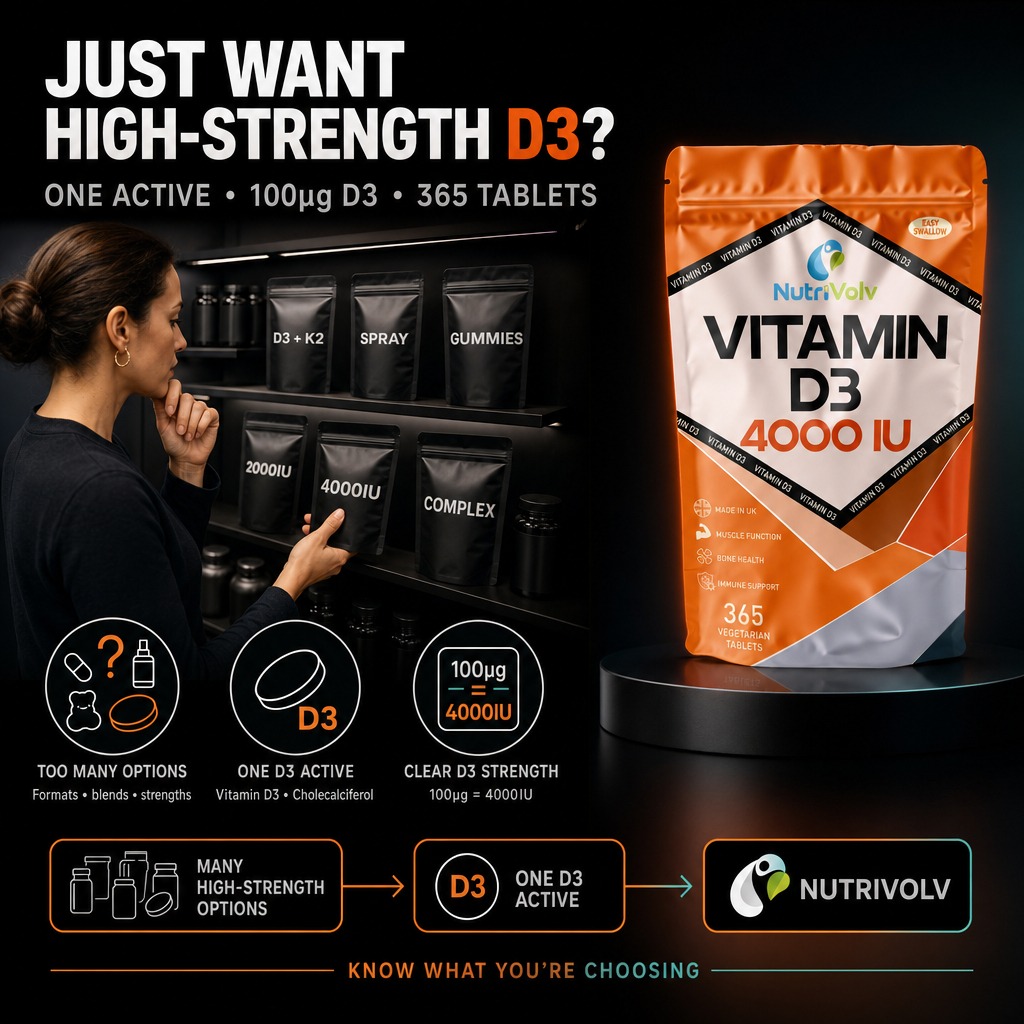
Take D3, it’s 87% more effective than D2. D3 is what your skin makes from sunlight, it’s the form your body prefers and uses most efficiently. It raises blood levels faster and keeps them elevated longer than D2. D3 binds better to vitamin D receptors and converts more readily into the active hormone your cells actually need. D2 comes from plant sources and breaks down quicker in your body, requiring more frequent dosing to maintain stable levels. The metabolic pathway for D3 is simply superior, you get better results from the same dose compared to D2. That’s why virtually all high-quality supplements and medical treatments use D3 instead of D2. The only reason D2 exists in supplements is because it used to be cheaper to produce, but that advantage has disappeared. Some prescription vitamin D is still D2 for historical reasons, but D3 works better. Nutrivolv’s 4000IU D3 gives you the superior form for optimal absorption and effectiveness. Don’t waste time with D2 when D3 delivers significantly better outcomes.
Yes, especially if you’re deficient, which is likely during UK winters. Vitamin D powers your mitochondria, the cellular batteries that generate energy. When you’re low, your cells literally can’t produce energy efficiently, which shows up as persistent tiredness and rubbish stamina. Correcting deficiency improves energy levels, reduces daytime sleepiness, and boosts physical performance within 4 to 6 weeks. It also regulates serotonin, which affects your sleep-wake cycle, so you sleep better and wake up less groggy. Many people with unexplained chronic fatigue see substantial improvements once their vitamin D levels normalise. The effect is most dramatic if you were properly deficient to start with, extremely common from October through March when the UK gets virtually no UVB sunlight. Vitamin D also reduces muscle weakness and speeds recovery from exercise, contributing to feeling more energetic overall. The 4000IU dose provides therapeutic levels that genuinely shift energy and fatigue when taken consistently. If you’ve been dragging for months and can’t figure out why, low vitamin D is a solid bet, especially in winter.